

Trends
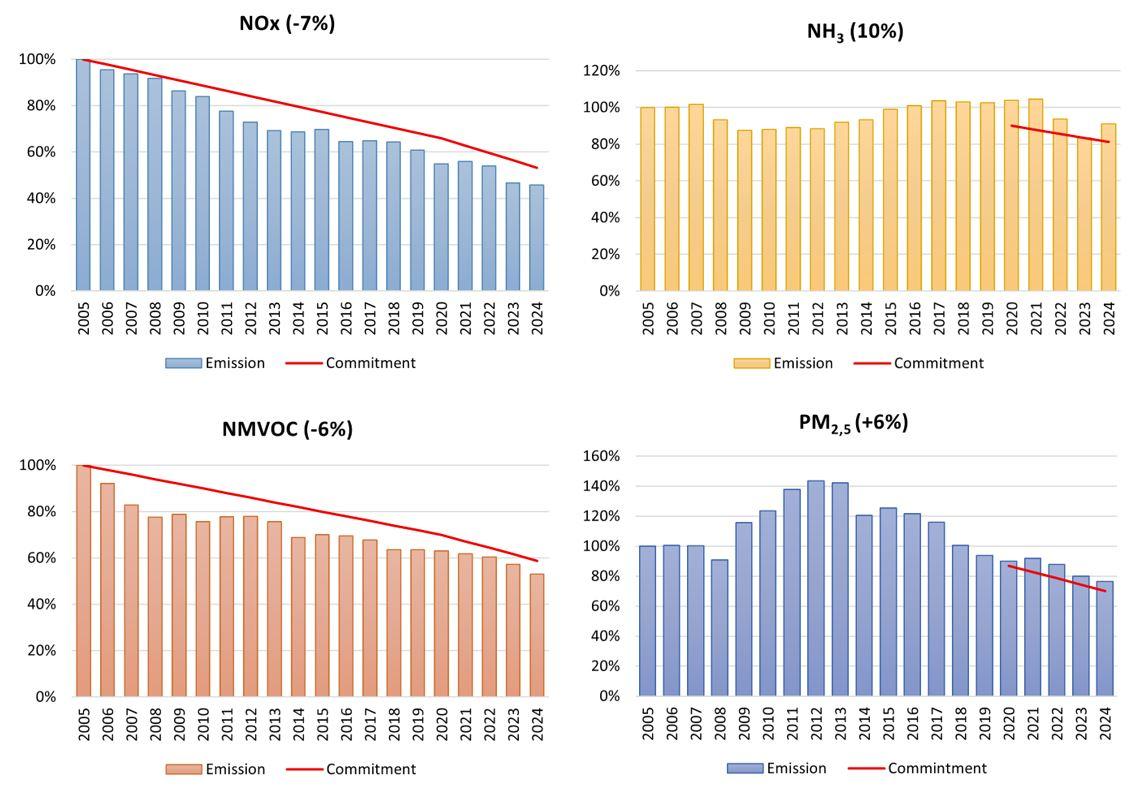
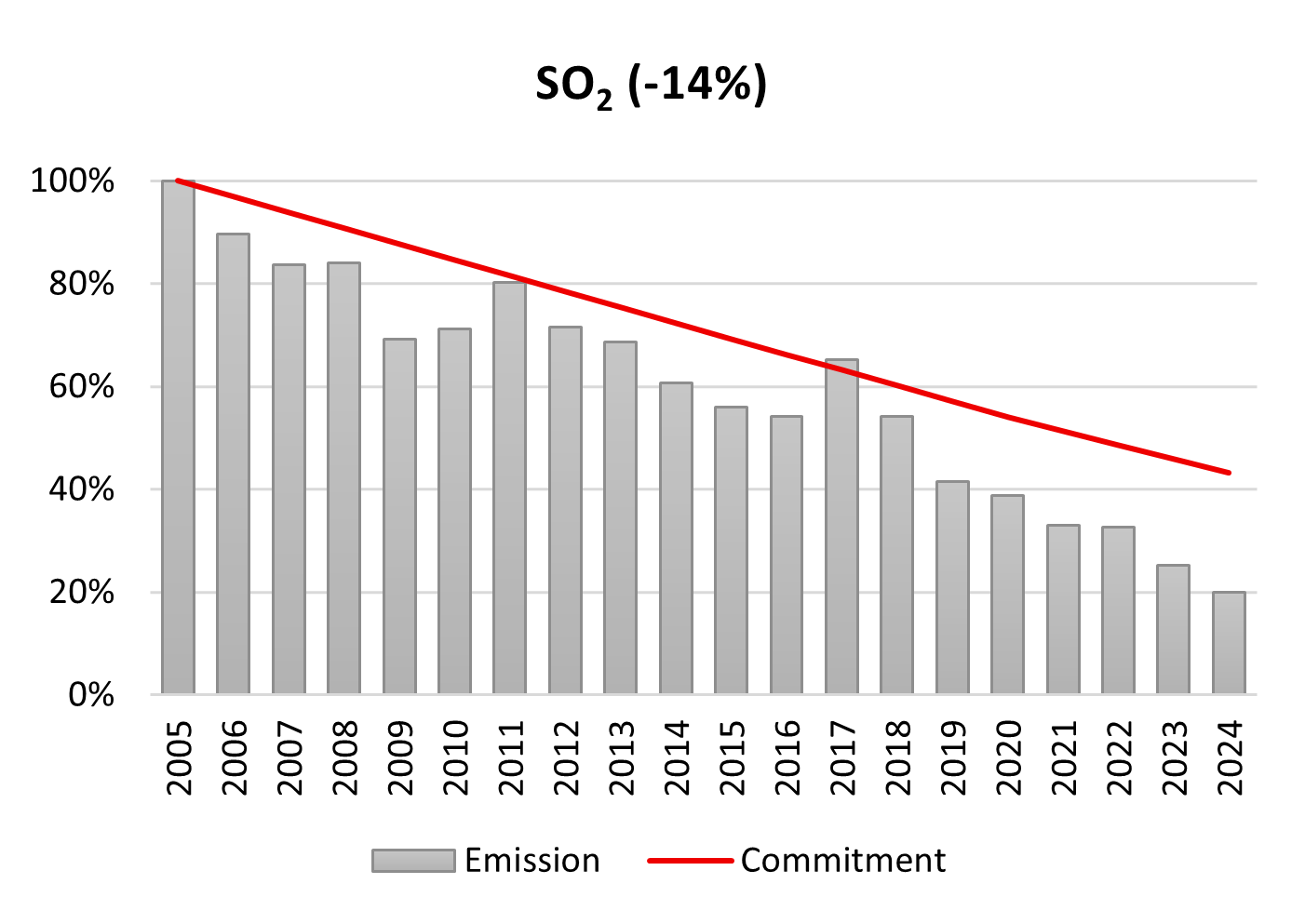
For 2024 and the following years, the revised Gothenburg Protocol establishes new emission reduction commitments for all Parties, including Hungary, relative to the year 2005. These commitments apply to sulphur dioxide (SO2), nitrogen oxides (NOx), non-methane volatile organic compounds (NMVOC), ammonia (NH3), and particulate matter with a diameter of less than 2.5 µm (PM2.5).
The figures below illustrate how emissions have changed since 2005 in light of these emission reduction commitments. The red lines indicates the required reduction rate. When the emission data for a given year fall below the line, it means that Hungary has met its commitment for that year. Negative values on the chart show by how much the country’s 2024 emissions were lower than the committed ceiling, while positive values indicate exceedances. A value of zero means that the commitment was met exactly.
During previous years, the commitments for ammonia (NH₃) and PM2.5 were not met; in 2024, ammonia exceeded the commitment by 10%, while PM2.5 exceeded it by 6%.
Further details and trends can be explored in the expandable submenus on the left-hand side.